
Portici.
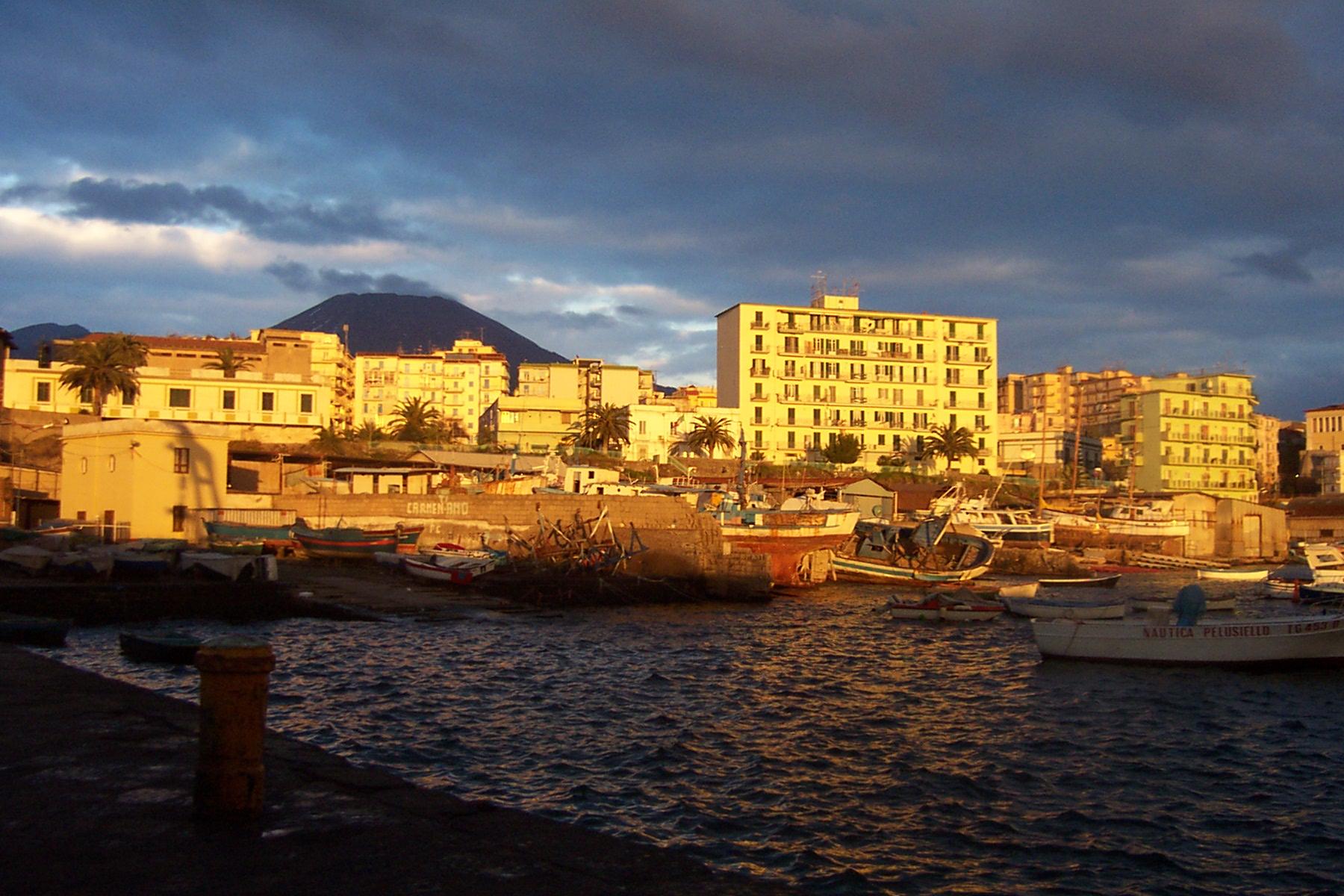
Portici sits between the Gulf of Naples and the western slopes of Vesuvius, with a royal palace, scientific collections and a working coastal town around them. Its villas belong to the architectural story of the Miglio d’Oro, while the nearby railway museum recalls the Naples–Portici line inaugurated in 1839.
Photo credits1
- Depicts: Portici80055 Portici NA, Italy - panoramio. Author: gustavo confalone. Credit: https://web.archive.org/web/20161103033139/http://www.panoramio.com/photo/130636116. License: CC BY-SA 3.0 (https://creativecommons.org/licenses/by-sa/3.0). Source: https://commons.wikimedia.org/wiki/File:80055_Portici_NA,_Italy_-_panoramio.jpgCropped to fit the display.
Make your way to Portici
Choose a tool and your dates to check the options for your trip.
More ways to explore
- Country
- Italy
- Currency
- EUR
- Time zone
- Europe/Rome
Portici sits between the Gulf of Naples and the western slopes of Vesuvius, with a royal palace, scientific collections and a working coastal town around them. Its villas belong to the architectural story of the Miglio d’Oro, while the nearby railway museum recalls the Naples–Portici line inaugurated in 1839.
Plan the visit around two or three distinct places rather than expecting one waterfront attraction to contain everything. The Reggia and its botanical garden, Granatello’s marine research centre and Pietrarsa each deserve their own route and admission check. Portici is also a useful base for exploring the neighbouring Vesuvian towns, which remain separate destinations.
When to go
Indoor palace rooms and railway collections can anchor a cooler-season visit, with gardens and coast added when conditions suit. The Reggia publishes a winter calendar from 15 October to 15 March and normally closes Mondays. Its announced Luciano D’Inverno photography exhibition runs from 30 October 2026 to 29 March 2027 during museum opening times. Check the actual programme before travelling. San Ciro’s patronal feast falls on 31 January, but the published 2026 religious schedule is historical information rather than a future event timetable.
Getting there
For the Reggia, its own directions use Portici-Ercolano station on the Naples–Salerno railway, followed by Corso Umberto I, Piazza San Ciro and Via Università. EAV’s Portici Via Libertà station is another approach, with a route through the upper park when accessible. For Pietrarsa, the museum recommends Pietrarsa–San Giorgio a Cremano station instead. These are different stops. Granatello is the local harbour: use any booked boat’s exact embarkation instructions, and do not infer a current scheduled ferry solely from a port name in a directory.
Getting around
Group the Reggia, nearby town streets and Granatello according to your entrance and booking times, then allow a separate transfer for Pietrarsa. Check whether a proposed route through the palace grounds is open for your visit rather than treating it as an unrestricted public shortcut. The Reggia’s directions also identify the local TLA red bus line on Via Università; consult the current service before relying on it. With luggage or mobility needs, compare street access and station arrangements for the particular destination, not only the nearest map marker.
Local food
Vesuvian apricots offer a food connection to the landscape around Portici. The regional agriculture record includes the town in their growing area and lists Portici among the named varieties. Look for fresh fruit in its early-summer season and preserves at other times; different varieties vary in sweetness, aroma and texture. Ask about the origin and ingredients of a jam or pastry rather than assuming the town name guarantees local fruit. A snack between palace and coast can fit the day more comfortably than a long meal before a reserved museum appointment.
What to see
At the Reggia, combine the royal apartment with the Herculanense Museum. The latter uses multimedia and reconstructions to explain the eighteenth-century excavations and collection; most of the old collection moved to what is now Naples’ National Archaeological Museum. At Pietrarsa, historic locomotives, carriages and railway models occupy former Bourbon workshops by the sea. Turtle Point at Granatello adds a very different subject: marine research and rehabilitation of injured turtles, with an educational visit booked in advance rather than an animal show.
Towns and neighbourhoods
Via Università and the palace form one cultural focus; Piazza San Ciro and the streets towards Portici-Ercolano station connect it with the town and coast. Granatello is the harbour area, with Turtle Point and the urban park nearby. Corso Garibaldi contains historic villas including Villa Savonarola, while Bellavista is another inland reference when reading addresses. Pietrarsa lies towards Naples and has its own station. Do not confuse the palace museum’s name with the archaeological ruins at neighbouring Ercolano: they are separate visits.
Coast and outdoors
Portici’s most clearly documented outdoor options are gardens and the seafront park. The Reggia’s botanical garden includes a fern area, palms, Mediterranean planting and specialist collections; the succulent greenhouse has separate visiting conditions. Granatello’s urban park provides green space, a play area and toilets by the sea, with access subject to the manager’s opening notices and weather. A harbour view does not establish a swimming beach. If swimming is your main goal, check the precise authorised location and current local bathing notices before setting out.
Where to stay
A base near Piazza San Ciro or the palace suits repeated cultural visits and town errands. The Granatello side suits the coast and the Portici-Ercolano rail approach. Corso Garibaldi and inland addresses can be useful for other parts of town but need a clear final route to your chosen station. Ask the host which railway network they mean by “near the train”, whether the entrance has steps and how late arrivals work. A Portici address does not place you inside the Herculaneum excavation site or in central Naples.
Useful before you go
Check the ticket’s actual coverage. MUSA’s ordinary admission excludes the succulent greenhouse, while certain weekend or guided options add rooms or collections. The university museum explicitly does not join the state museums’ first-Sunday-free scheme. Turtle Point requires booking and prohibits touching or feeding turtles, tapping tanks and flash photography. Pietrarsa’s operator announced closure for 28–29 October 2026 followed by a special opening period; consult its current notice rather than an older directory. Granatello park accessibility does not automatically describe museum interiors or the entire route from a station.
Good to know before you go
Is the Herculanense Museum the excavation at Ercolano?
No. It is a museum inside the Reggia di Portici explaining the history of the early excavations and collections, partly through multimedia and reproductions.
Which station serves Pietrarsa?
The operator recommends Pietrarsa–San Giorgio a Cremano. Portici-Ercolano is a different station used in the palace’s approach directions.
Is the Reggia free on the first Sunday of every month?
MUSA explicitly says it does not participate in that state-museum scheme because it is a university museum. Check its own admission rules.
Can I simply turn up at Turtle Point?
The operator requires a booked day and time. It is a research and rehabilitation centre, and visitors follow rules protecting the turtles.
Does a normal Reggia ticket include the succulent greenhouse?
The published ordinary ticket excludes it. Guided and other options have different inclusions, so choose the actual visit you want.
Sources & references
These references support the guide. Confirm opening hours, access and travel services before you go.
- 01Portici municipality — coastal setting, historic villas and districts
- 02MUSA university museums — current visitor overview
- 03MUSA — Herculanense Museum; multimedia and transferred original collections
- 04MUSA — botanical garden and specialist plant collections
- 05MUSA — actual ticket scope, winter calendar and first-Sunday exception
- 06MUSA — distinct station approaches and local transport
- 07MUSA — announced photography exhibition 30 October 2026–29 March 2027
- 08Fondazione FS — Pietrarsa collection, station and dated October closures
- 09Fondazione Dohrn — Turtle Point rehabilitation visit and mandatory booking
- 10Fondazione Dohrn — visitor rules
- 11Portici municipality — Granatello urban park and accessibility
- 12Campania Agriculture — Vesuvian apricots and Portici growing area
- 13Portici municipality — San Ciro feast tradition and dated 2026 programme
Where could the journey go next?
More guides in Italy. Compare the places and check actual connections before combining stops.
Torre del Greco
Torre del Greco is a Vesuvius foothill city known for coral craftsmanship, maritime life and its connection with the poet Giacomo Leopardi. The working harbour and dense historic centre tell a different story from a purpose-built seaside resort. Lava from earlier eruptions remains part of the town’s physical landscape.
Get to know the place
Naples
Naples is a city to explore in its own right, with a layered historic centre, royal architecture, lively neighbourhoods and a working waterfront. Use the old centre, the Via Toledo–Plebiscito area and the sea as different parts of a first visit, rather than seeing the city only between a flight and an island ferry.
Get to know the place
Torre Annunziata
Torre Annunziata is a working coastal town beneath Vesuvius, with the Roman remains of Oplontis embedded in its modern streets. Its main archaeological visit is the Villa of Poppea, a richly decorated residence buried in the eruption of AD 79. The name reflects an attribution to Poppaea Sabina or her family, rather than an ownership claim that can be stated with certainty.
Get to know the place
Castellammare di Stabia
Castellammare di Stabia pairs a working Gulf of Naples waterfront with the remains of Roman villas on the Varano plateau. Its own archaeology deserves time: Stabiae’s residential rooms, gardens and painted decoration tell a different story from a quick excursion to the streets of Pompeii.
Get to know the placePhoto credits4
- Depicts: Torre del GrecoTorre del greco porto. Author: Simone Di Somma. Credit: Own work. License: CC BY-SA 3.0 (https://creativecommons.org/licenses/by-sa/3.0/). Source: https://commons.wikimedia.org/wiki/File:Torre_del_greco_porto.jpgCropped to fit the display.
- Depicts: NaplesNapoli - Maschio Angioino - 202209302342 3. Author: Richard Nevell. Credit: Own work. License: CC BY-SA 4.0 (https://creativecommons.org/licenses/by-sa/4.0). Source: https://commons.wikimedia.org/wiki/File:Napoli_-_Maschio_Angioino_-_202209302342_3.jpgCropped to fit the display.
- Depicts: Torre AnnunziataAncient Pompeii - Boscoreale - Castellammare - Pompei - Torre Annunziata - Vesuvius - Sorrento - Capri - Panorama. Author: Norbert Nagel. Credit: Own work. License: CC BY-SA 3.0 (https://creativecommons.org/licenses/by-sa/3.0). Source: https://commons.wikimedia.org/wiki/File:Ancient_Pompeii_-_Boscoreale_-_Castellammare_-_Pompei_-_Torre_Annunziata_-_Vesuvius_-_Sorrento_-_Capri_-_Panorama.jpgCropped to fit the display.
- Depicts: Castellammare di StabiaCastellammare di Stabia 3. Author: Mentnafunangann. Credit: Own work. License: CC BY-SA 3.0 (https://creativecommons.org/licenses/by-sa/3.0). Source: https://commons.wikimedia.org/wiki/File:Castellammare_di_Stabia_3.JPGCropped to fit the display.
