
Denmark.
Denmark combines a peninsula, large islands and smaller island communities with cities built around trade, design and the sea. Copenhagen provides the capital’s museums and canals, while Jutland’s ports open towards Scandinavian crossings and broad coastal landscapes. A ferry journey can become the beginning of a varied stay rather than simply a transit day.
Photo credits1
- Depicts: Denmark
A little closer to Denmark
Geography, regions and practical details from the country guide. Go straight to a chapter, or browse every destination below.
Go straight to the destinationsDenmark combines a peninsula, large islands and smaller island communities with cities built around trade, design and the sea. Copenhagen provides the capital’s museums and canals, while Jutland’s ports open towards Scandinavian crossings and broad coastal landscapes. A ferry journey can become the beginning of a varied stay rather than simply a transit day.
Choose the scale of the trip carefully. A Copenhagen city break, a North Jutland beach holiday and several days on Bornholm are different plans with different transfers. Connect nearby places first, and leave space for changing weather, seasonal attractions and the actual timetable of the route you intend to use.
Landscape and trip style
Jutland connects Denmark to the European mainland, while islands shape much of the country’s landscape and transport. Coastal settings range from western dunes and exposed beaches to eastern bays and Bornholm’s rocky shores. Distances on a map do not always describe the journey: bridges, ferry crossings and the location of the correct terminal can determine the route.
Regions to explore
North Jutland includes the ferry towns of Hirtshals and Frederikshavn, with different coastlines and operators. Djursland includes Grenaa and coastal family attractions near Aarhus. Funen centres on Odense, with countryside and island outings; Zealand includes Copenhagen and further historic and coastal trips. Bornholm lies separately in the Baltic and merits its own island itinerary rather than a hurried addition.
Language
Danish is the national language, and English is widely understood in visitor settings. Keep the original Danish spelling of addresses and stops when using transport planners. Letters such as æ, ø and å appear in place names, including Rønne and Køge. Saving both the local name and translated description helps distinguish a passenger entrance from an office or freight address.
Money
Denmark uses the Danish krone, DKK or kr., rather than the euro. Compare prices in the currency displayed and check the final total when booking transport or accommodation. Service charges are included in restaurant, hotel and taxi bills; an additional tip is optional. A terminal or vessel accepting another currency does not establish a general payment rule for the country.
Culture and food
Royal collections, seafaring history and contemporary design sit alongside everyday cycling and neighbourhood café life. Food offers a practical introduction: try smørrebrød with its varied toppings, frikadeller meatballs, or Danish pastries such as cinnamon snails. Coastal menus often feature fish. Leave room for regional products and a local museum, rather than making every stop a repeat of the capital’s best-known sights.
When to go
Summer offers longer daylight and more scope for beaches, cycling and outdoor meals. Spring can be mild, autumn often brings rain, and winter requires preparation for cold and wind. Attractions may open in distinct seasons: Tivoli, for example, publishes separate holiday and summer periods. Check the specific calendar instead of assuming that a landmark’s popularity means it opens daily throughout the year.
Getting there
Choose the arrival port around the rest of the trip. Hirtshals has separate carrier terminals, Copenhagen’s Oslo ferry uses Dampfærgevej 30, and Rønne assigns different entrances to pedestrians and vehicles. The Grenaa–Halmstad Stena route ended on 30 April 2026, so older maps may mislead. Confirm the current operator and route before reserving onward transport or accommodation.
Getting around
Rail and bus networks connect many cities, and Rejseplanen helps combine journeys with local transfers. Island routes may need a separate ferry reservation. In Copenhagen, walking, cycling and public transport can cover a visit without a car. Learn cycle-lane etiquette and signals before renting a bike, and check bicycle carriage conditions when combining it with trains or ferries.
Planning your stay
Carry the travel documents required for your nationality and itinerary, including any transit country on the route. If adding Greenland or the Faroe Islands, check their specific entry rules separately; permission for a Danish or Schengen visit does not automatically settle every case. For ferry holidays, save terminal directions, boarding deadlines and accommodation arrival details offline before the travel day.
Good to know before you go
Does Denmark use the euro?
No. Its currency is the Danish krone, DKK.
Can I get around without speaking Danish?
English is widely understood, while original Danish place names remain useful for transport and addresses.
Is the Grenaa–Halmstad ferry still operating?
Stena Line ended that route on 30 April 2026; use current alternatives for Denmark–Sweden travel.
Do Greenland and the Faroe Islands have identical entry rules to Denmark?
Check their specific rules separately; requirements depend on nationality and the travel permission held.
Sources & references
These references support the guide. Confirm opening hours, access and travel services before you go.
- 01European Union — Denmark country facts
- 02VisitDenmark — language and geography
- 03VisitDenmark — regions
- 04VisitDenmark — Odense and Funen
- 05VisitDenmark — traditional cuisine, January 2026
- 06VisitDenmark — seasons
- 07VisitDenmark — tipping
- 08VisitDenmark — public transport
- 09Visit Copenhagen — cycling rules
- 10Color Line — Hirtshals terminals
- 11Go Nordic Cruiseline — Copenhagen terminal
- 12Bornholmslinjen — passenger and vehicle entrances
- 13Stena Line — Grenaa–Halmstad closure
- 14Danish Ministry of Foreign Affairs — Greenland and Faroe entry requirements
- 15Tivoli — seasonal calendar
Find your place in Denmark
Open the guides, get a feel for the differences between places, and find the ones that fit your plans.

Copenhagen
Copenhagen combines a historic harbour with royal collections, contemporary neighbourhoods and everyday life on bicycles. Nyhavn gives the familiar view of coloured waterfront houses, but the city opens out through canals, parks and former industrial districts. A visit works best when a few major sights leave room for neighbourhood walks.
Read the field guide
Frederikshavn
Frederikshavn is a working Kattegat port with more to offer than a ferry connection. Its older fishing quarter, coastal defences and wooded hills tell different parts of the town’s maritime story. The centre provides a practical stopover, while the Bangsbo area and northern beaches justify staying longer.
Read the field guide
Grenaa
Grenaa sits on the eastern coast of Djursland, with a market-town centre inland from its working harbour and sandy coast. The aquarium, local history museum and beach give a stopover several different directions. Its compact shopping streets have a quieter character than the industrial port, so allow time for both rather than treating them as one place.
Read the field guide
Hirtshals
Hirtshals faces the Skagerrak from northern Jutland, with fishing vessels, international ferries and broad coastal scenery at the heart of its identity. A lighthouse above the shore and the North Sea Oceanarium make it worth exploring beyond the terminal. The harbour is extensive, while the town centre and its nearby beach offer a more compact visit.
Read the field guide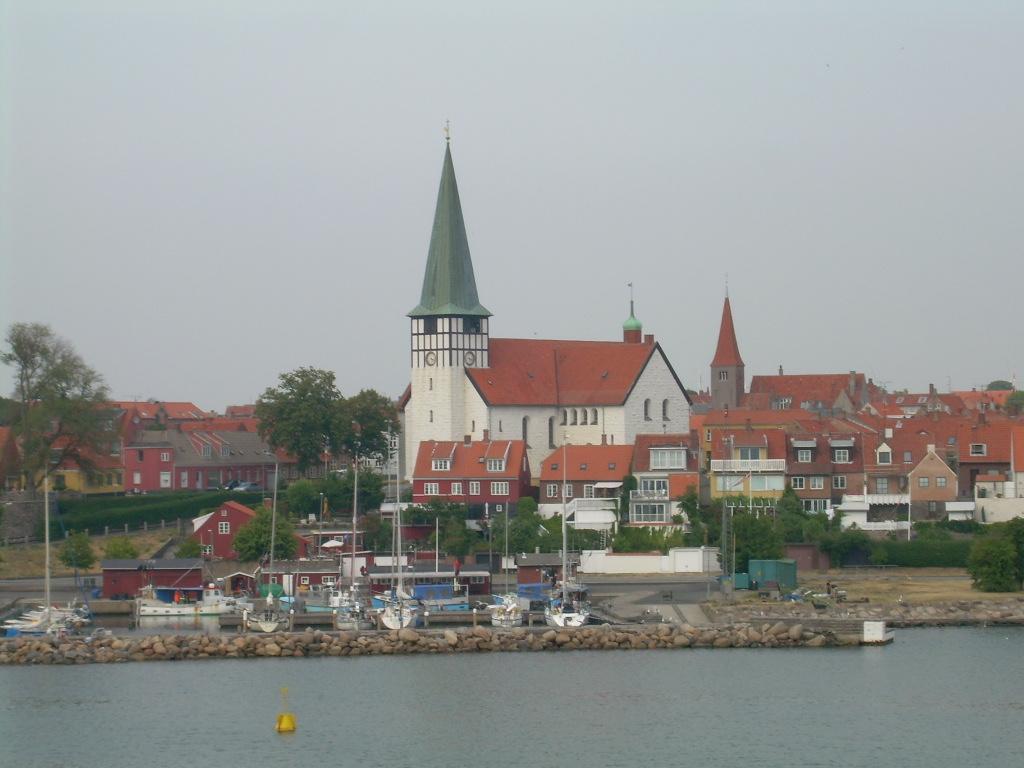
Rønne
Rønne is Bornholm’s principal arrival town, on the island’s western coast. Its harbour, old streets and ceramic traditions give it a character beyond the ferry journey. Cultural collections sit alongside working crafts, while beaches and green areas allow a relaxed outdoor break without crossing the whole island.
Read the field guidePhoto credits5
- Depicts: Copenhagen
- Depicts: FrederikshavnDamsgaard i Frederikshavn ca 1978 (danmarks "billhälls"). Author: Björn Reilund. Credit: Own work. License: CC BY-SA 4.0 (https://creativecommons.org/licenses/by-sa/4.0). Source: https://commons.wikimedia.org/wiki/File:Damsgaard_i_Frederikshavn_ca_1978_(danmarks_%22billh%C3%A4lls%22).jpgCropped to fit the display.
- Depicts: GrenaaGrenå Marina. Author: Old Dane. Credit: Own work. License: CC BY-SA 3.0 (https://creativecommons.org/licenses/by-sa/3.0). Source: https://commons.wikimedia.org/wiki/File:Gren%C3%A5_Marina.jpgCropped to fit the display.
- Depicts: Hirtshals
- Depicts: RønneRønne. Author: Danielle Keller ( Danielle_dk ). Credit: Self-photographed. License: Public domain (https://creativecommons.org/publicdomain/mark/1.0/). Source: https://commons.wikimedia.org/wiki/File:R%C3%B8nne.jpg
