
Guernsey.
The Bailiwick of Guernsey includes Guernsey, Alderney, Sark and Herm, alongside smaller islands. It is a self-governing Crown Dependency rather than part of the United Kingdom. The islands share close connections, but their landscapes, local institutions and ways of getting around make each a distinct destination.
Photo credits1
- Depicts: Guernsey
A little closer to Guernsey
Geography, regions and practical details from the country guide. Go straight to a chapter, or browse every destination below.
Go straight to the destinationsThe Bailiwick of Guernsey includes Guernsey, Alderney, Sark and Herm, alongside smaller islands. It is a self-governing Crown Dependency rather than part of the United Kingdom. The islands share close connections, but their landscapes, local institutions and ways of getting around make each a distinct destination.
Start with Guernsey if you want a town base and a broad choice of services, then add another island according to your interests. Herm offers a compact walking and beach escape, Sark a car-free rural stay, and Alderney a combination of wildlife, beaches and military history.
Landscape and trip style
The islands lie in the Bay of Saint-Malo, closer to Normandy than to England’s south coast. Guernsey is the largest island in the Bailiwick, with St Peter Port on its eastern shore. Tidal waters separate the islands, so distances that look short on a map still require a planned boat journey.
Regions to explore
Treat Guernsey’s capital, countryside and coastal areas as parts of one island itinerary. Alderney has its own airport and principal town, St Anne. Sark and Herm are separate sea journeys, not neighbourhoods of St Peter Port. Jersey belongs to a different Crown Dependency and should be planned as another destination rather than included in this group.
Language
English is the main language for visitors. Guernésiais, a local Norman language also known as Guernsey French, is an important part of the island’s cultural heritage. On Sark, Sercquiais has its own history. French-looking family and street names reflect these connections; use the written local name when looking up transport or an address.
Money
The islands use sterling, and Guernsey issues its own notes and coins. British sterling is accepted alongside local currency, but local notes are generally not accepted in the UK. Spend or exchange remaining island cash before leaving, and keep a small amount available for places where card use is limited.
Culture and food
Norman roots remain visible in place names and heritage, while occupation history is an important and sometimes difficult part of the islands’ story. Guernsey’s traditional food includes bean jar and gâche, and dairy products are a distinctive local theme. Museums and historic buildings help explain the differences between the islands beyond their shared sea views.
When to go
Choose the warmer months for longer island-hopping days, beach time and seasonal excursions. Spring and autumn can suit walking and birdwatching, especially on Alderney. For winter travel, choose a specific accommodation and confirm its services before booking transport. Build flexibility into any trip with several separate sea and air connections.
Getting there
Guernsey has an airport and international ferry arrivals at St Peter Port. Alderney has separate air and passenger-boat services. Herm and Sark require boat travel; connecting through Guernsey does not make every onward journey part of one ticket. Check official entry guidance for your nationality and route, particularly when arriving from outside the Common Travel Area.
Getting around
Guernsey offers buses, taxis, cars and cycling; Alderney also allows cars. Sark and Herm require a different approach centred on walking, with bicycles and carriages available on Sark. Confirm harbour transfers and luggage arrangements on the smaller islands, and check whether a landing involves steps at the tide expected on your travel day.
Planning your stay
Choose one or two islands for a short break instead of packing every crossing into a few days. Check tide-aware access for beaches and causeways, and book popular small accommodation ahead. Mobile roaming and medical arrangements can differ from those assumed for the UK or EU, so review your existing provider and travel cover before departure.
Good to know before you go
Does this destination include Jersey?
No. Jersey is a separate Crown Dependency. The Guernsey group includes Guernsey, Alderney, Sark and Herm among its islands.
Are all the islands car-free?
No. Guernsey and Alderney allow cars; Sark and Herm have different visitor transport arrangements.
Can I reach Herm or Sark by plane?
Neither has an airport. Plan a sea connection, usually through Guernsey, with enough transfer time.
Can I use British pounds?
Yes. British sterling is accepted. Local island notes may be difficult to use after returning to the UK.
Sources & references
These references support the guide. Confirm opening hours, access and travel services before you go.
- 01States of Guernsey — location and constitution
- 02States of Guernsey — island overview
- 03Visit Guernsey — languages
- 04Visit Guernsey — practical island information
- 05Visit Guernsey — Norman heritage
- 06Visit Guernsey — traditional recipes
- 07Visit Guernsey — local transport
- 08Visit Alderney — arrival
- 09Herm — travel
- 10Sark — travel
- 11Brittany Ferries — St Peter Port
- 12Visit Alderney — nature
- 13Visit Guernsey — entry planning
- 14Visit Alderney — local transport
- 15Sark — local transport
Find your place in Guernsey
Open the guides, get a feel for the differences between places, and find the ones that fit your plans.
 Local overview of Alderney
Alderney
Alderney brings together a small town, broad beaches and an unusually dense military landscape. Braye Harbour is the sea gateway, while St Anne provides the main town streets and services. A walk can move quickly from a sandy bay to a Victorian fort or a reminder of the island’s wartime occupation.
Read the field guide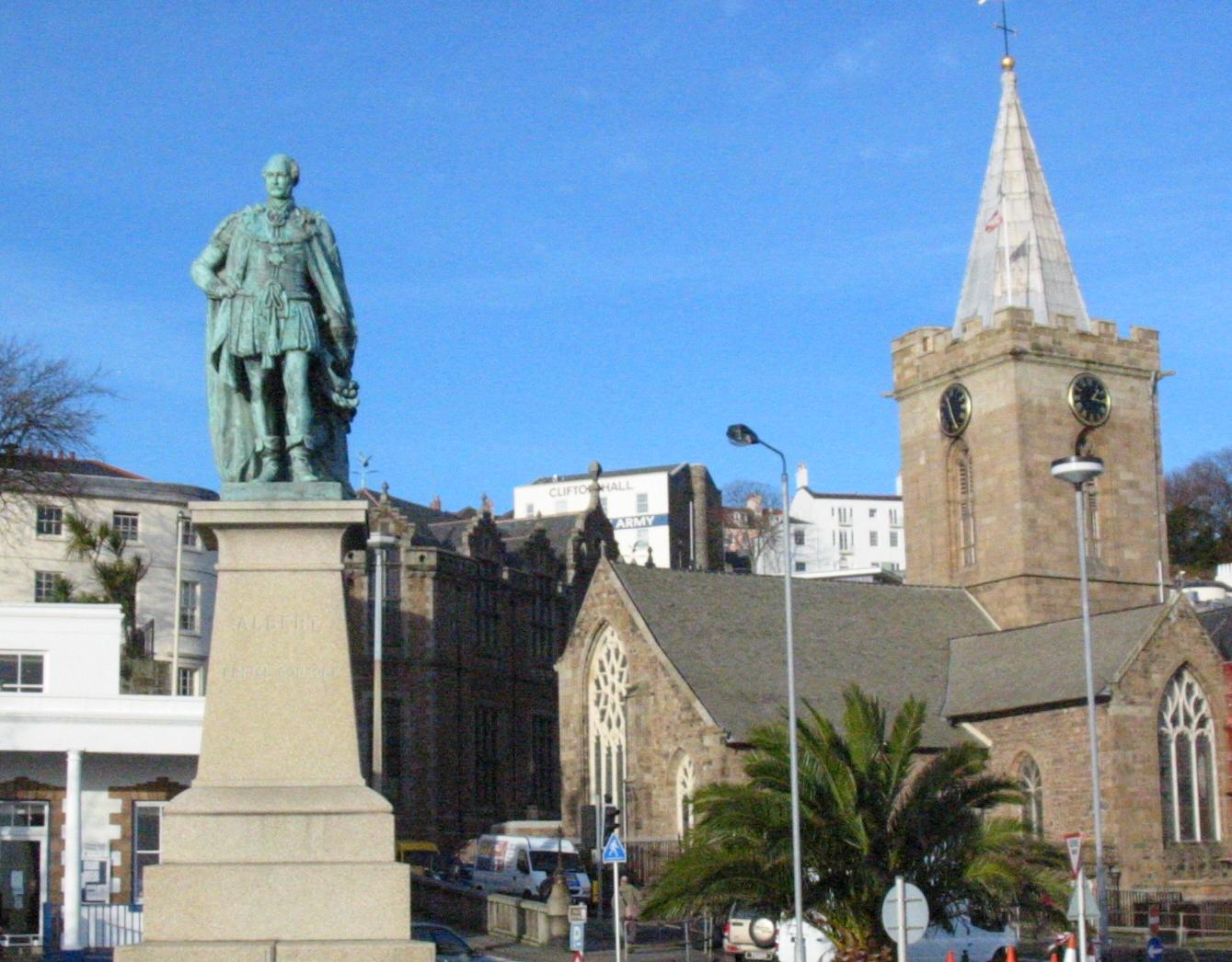
Guernsey (St Peter Port)
St Peter Port is Guernsey’s capital and main ferry town, rising from a busy harbour into cobbled streets, gardens and hillside houses. Castle Cornet marks the harbour mouth, while the town above connects the island’s maritime life with the years Victor Hugo spent in exile here.
Read the field guide
Herm
Herm is a small, car-free island reached by boat from St Peter Port in Guernsey. Its appeal is the change of pace: sandy paths, a low northern common and a more rugged southern coast replace town traffic, with Shell Beach and Belvoir Bay providing two very different places to stop.
Read the field guide
Sark
Sark is a car-free island of lanes, fields and high coastal edges, reached only by sea. The arrival at Maseline Harbour begins below the main plateau: after the climb or tractor-bus ride up Harbour Hill, walking, cycling and horse-drawn carriages set the pace.
Read the field guidePhoto credits4
- Area image: Alderney - Fort Clonque.jpg — local overview of Alderney.Alderney - Fort Clonque. Author: Andree Stephan. Credit: Own work. License: CC BY 3.0 (https://creativecommons.org/licenses/by/3.0). Source: https://commons.wikimedia.org/wiki/File:Alderney_-_Fort_Clonque.jpgCropped to fit the display.
- Depicts: Guernsey (St Peter Port)Albèrt Églyise Saint Pièrre Port Dgèrnésy. Author: Man vyi. Credit: Self-photographed. License: Public domain (https://creativecommons.org/publicdomain/mark/1.0/). Source: https://commons.wikimedia.org/wiki/File:Alb%C3%A8rt_%C3%89glyise_Saint_Pi%C3%A8rre_Port_Dg%C3%A8rn%C3%A9sy.jpg
- Depicts: HermAntony Gormley's "Another Time XI" on Herm - facing nothing. Author: Erik1980. Credit: Own work. License: CC BY-SA 3.0 (https://creativecommons.org/licenses/by-sa/3.0). Source: https://commons.wikimedia.org/wiki/File:Antony_Gormley%27s_%22Another_Time_XI%22_on_Herm_-_facing_nothing.JPGCropped to fit the display.
- Depicts: SarkBalles d'êtrain, Sèr. Author: Tswgb. Credit: Self-photographed. License: Public domain (https://creativecommons.org/publicdomain/mark/1.0/). Source: https://commons.wikimedia.org/wiki/File:Balles_d%27%C3%AAtrain,_S%C3%A8r.jpg
