Gamopilafo
ΓαμοπίλαφοThe wedding pilaf of the Rethymno mountains, rich with meat broth and staka.
Order it with boiled meat in the villages around Psiloritis.

Rethymno sits on Crete’s north coast between Chania and Heraklion. Its old town brings Venetian doorways, Ottoman monuments and small squares together below the Fortezza, while a long sandy beach begins east of the harbour.
Choose a tool and your dates to check the options for your trip.
Rethymno sits on Crete’s north coast between Chania and Heraklion. Its old town brings Venetian doorways, Ottoman monuments and small squares together below the Fortezza, while a long sandy beach begins east of the harbour.
Choose it for a stay that combines a walkable historic centre with time by the sea. The harbour, museum and lanes suit a city day; inland villages and the wider district deserve separate outings.
Spring and autumn work well for old-town walks and countryside trips, while summer combines the city with the beach. Rethymno also has a year-round urban life and a carnival tradition; check each year’s event dates. Turtle-related visits follow the conservation season and organiser’s programme. A page describing summer nest excavations does not establish an event on your autumn or winter date.
Suggested months: Apr · May · Jun · Sept · Oct
Typical seasonal patterns from the app’s editorial guide; not a weather forecast or measured visitor count.
Rethymno has no passenger airport of its own. Use Chania, CHQ, or Heraklion, HER, and arrange the onward road journey. KTEL publishes intercity and airport information; an ordinary Heraklion-city connection is not automatically an airport connection. If arriving by ferry elsewhere in Crete, allow for the transfer to Rethymno and check the actual arrival port on the ticket.
Fly to Chania (about 1 h by road) or Heraklion (about 1 h 15).
Typical ferry timesPiraeus to Souda ≈ 9 h, then ≈ 1 h by road
Typical ranges across operators and seasons. These are not timetables.Keep the historic centre mainly on foot and use buses or a taxi for onward journeys. The approach to the Fortezza climbs above the harbour; ask about the route if steps or gradients matter. KTEL asks passengers to secure intercity seats in advance and to arrange intermediate-stop boarding. Check the current schedule for the return from a village outing rather than assuming the coastal service pattern applies inland.
Recognise dakos with tomato and cheese, apaki smoked pork, boubouristi snails, slow-cooked tsigariasto and Cretan cheeses such as graviera and mizithra. Menus differ, so ask what the kitchen has prepared that day. A harbour meal offers one setting; old-town courtyards and lanes offer another. Tell the restaurant about allergies and dietary needs rather than assuming a vegetable or pie dish has no dairy.
The wedding pilaf of the Rethymno mountains, rich with meat broth and staka.
Lamb roasted around the fire, a speciality of the Rethymno hinterland.
Barley rusk soaked with grated tomato, topped with mizithra or feta, olive oil and oregano.
Small pies filled with soft cheese or wild greens, baked or fried. Sweet versions come with honey.
Rich butter-cream made from sheep’s milk skimmings, often served with eggs or pilaf.
Snails fried face-down in salt and olive oil, finished with vinegar and rosemary.
Start at Guora Gate and follow Ethnikis Antistaseos towards Mikrasiaton Square, Saint Francis and the lanes leading to Rimondi Fountain. Look for Neratze Mosque and its minaret, then continue to the Venetian harbour. Above the town, the Fortezza occupies Paleokastro hill. The Archaeological Museum’s current temporary exhibition is in Saint Francis, at 4 Agiou Frangiskou Street, rather than the older museum location beside the fortress.
The old town is the place for narrow lanes, historic façades, courtyards and an evening stroll. The small Venetian harbour gives a distinct waterfront setting, while the newer town and beach promenade extend to the east. Around Guora Gate, combine the historic walk with everyday city services. A resort advertised in the Rethymno district may be in a different coastal settlement, so compare actual addresses.
The town’s sandy beach starts east of the centre and continues into the broader Rethymno Bay beachfront. It is an easy choice for a beach-and-city day, with conditions affected by north-coast wind and waves. This is also a loggerhead nesting area: respect marked nests, keep the beach dark and quiet at night, and never handle hatchlings or open a nest yourself.
Stay inside or beside the old town for evenings among the lanes, or along the eastern town beach for a seafront base. Farther-east resort areas have a different daily journey into the centre. Before choosing a historic room, ask about stairs, lift access, noise and where luggage can be dropped. Confirm parking separately from the room booking.
For a first day, walk from Guora Gate to the museum, fountain and harbour, then visit the Fortezza when its current opening hours and the temperature suit. Keep another half-day for the beach or a separate countryside excursion. On nesting beaches, follow ARCHELON’s signs and staff guidance. Save the accommodation’s arrival details and the transport information for your exact date.
In the church of Saint Francis at 4 Agiou Frangiskou Street. Check the Ministry of Culture’s current visitor information.
No. Plan arrival through Chania or Heraklion and a separate onward road journey.
Yes. The town beach begins east of the centre; follow the day’s sea conditions and nesting-area signs.
Do not touch them. Respect nest protections and contact ARCHELON volunteers if help appears necessary.
These references support the guide. Confirm opening hours, access and travel services before you go.
More guides in Greece. Compare the places and check actual connections before combining stops.

Crete combines major cities, Minoan archaeology, mountains and very different coasts across Greece's largest island. It supports a long holiday, but it is better approached through a few chosen areas than a single base expected to reach every landmark comfortably. Build time for the food, villages and landscape between the better-known sights.
Get to know the place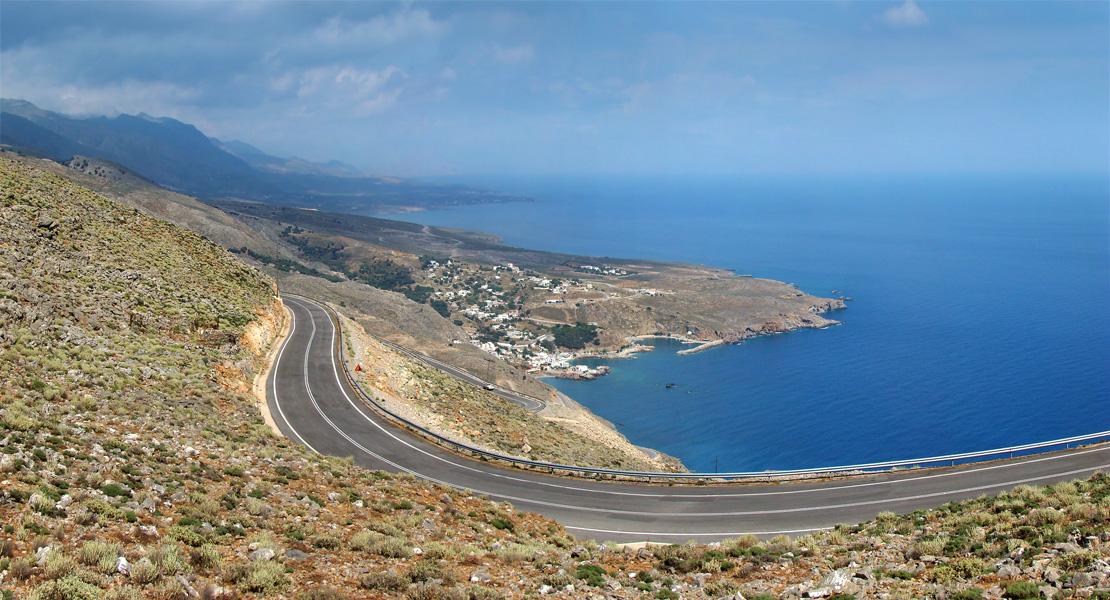
Hora Sfakion, usually called Sfakia in travel plans, is a road-accessible village and port on Crete’s south coast. The White Mountains rise behind it, while the harbour is a starting point for coastal journeys. Give the waterfront some time rather than treating it only as a transfer.
Get to know the placeCrete area overviewGlyka Nera, or Sweet Water Beach, lies on Crete’s south coast between Hora Sfakion and Loutro. Pebbles, blue water and steep coastal land give it a very different setting from a beach beside a road. Its name refers to freshwater emerging through the shore.
Get to know the place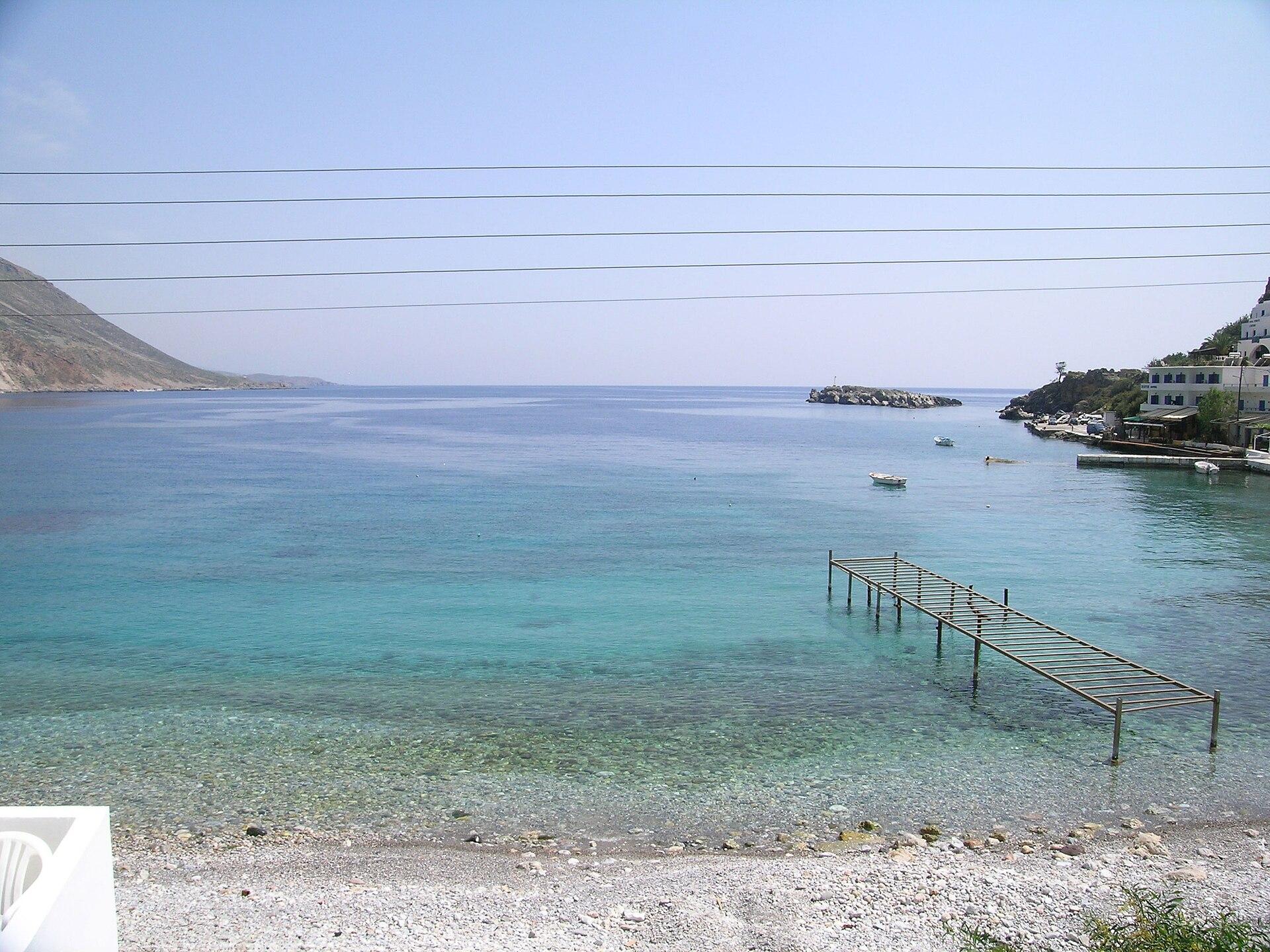
Loutro curves around a small bay beneath the south-coast slopes of Crete. White buildings, a pebble shore and waterfront rooms make it a place to slow down between swims and meals. Boats and footpaths provide its connection with the surrounding coast.
Get to know the place