Pitarakia
ΠιταράκιαSmall fried cheese pies made with local soft cheese.
Order a portion to share as a starter.
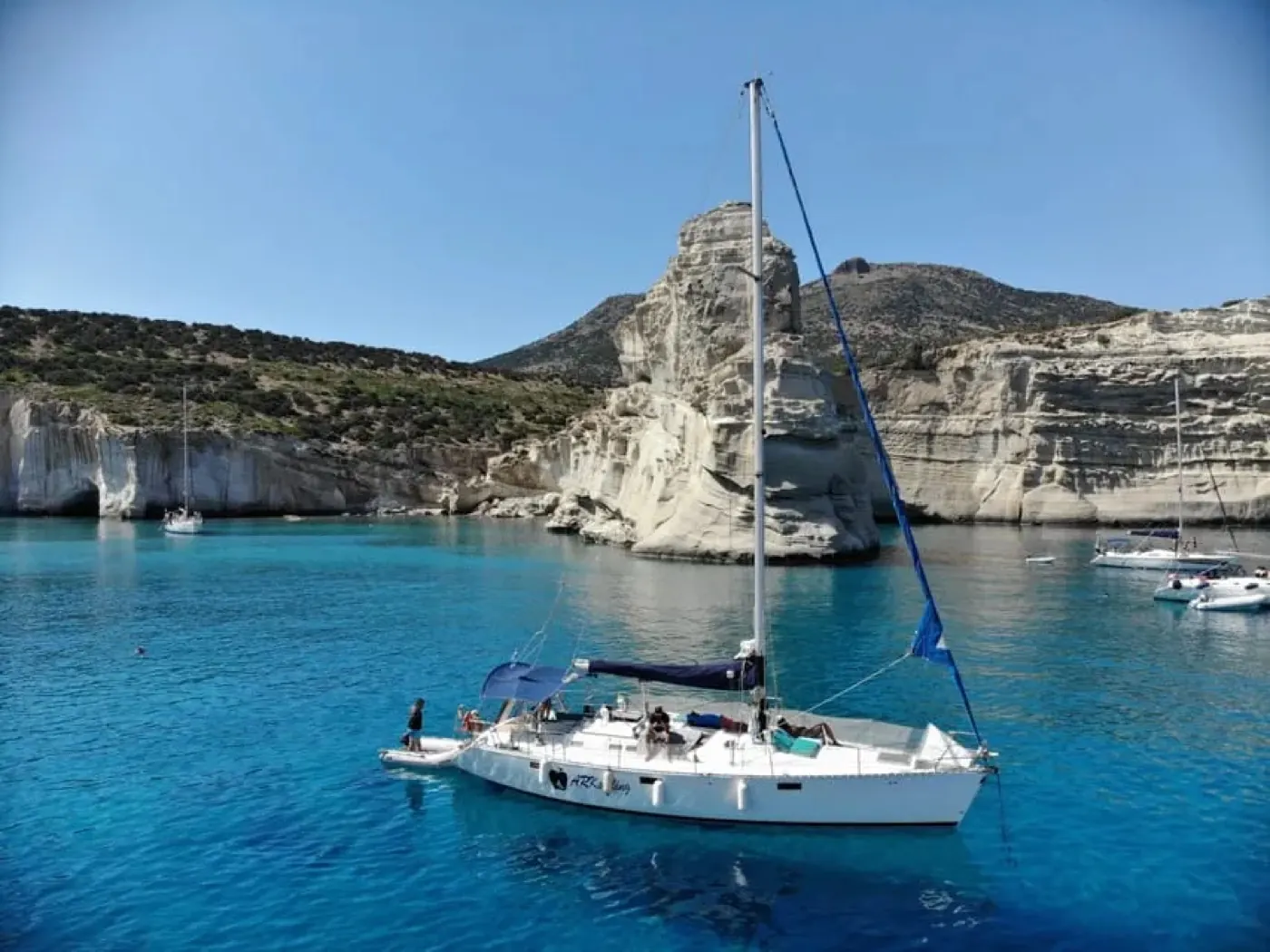
Milos is an island of volcanic colours, fishing settlements and sharply contrasting coasts. White rock at Sarakiniko, the formations around Kleftiko and the inland village setting of Plaka support very different days. Give the coast room in the itinerary instead of turning every photograph into another hurried stop.
Choose a tool and your dates to check the options for your trip.
Milos is an island of volcanic colours, fishing settlements and sharply contrasting coasts. White rock at Sarakiniko, the formations around Kleftiko and the inland village setting of Plaka support very different days. Give the coast room in the itinerary instead of turning every photograph into another hurried stop.
Choose a base around your actual plans: Adamantas for the main harbour setting, Plaka for village walks or Pollonia for its own waterfront and the Kimolos connection. The airport, main ferry port and Pollonia landing are separate points, so a useful map starts with the journey you have booked.
Boat excursions depend on the day’s conditions and the route actually offered. Confirm the starting port and possible alternative itinerary before building a day around Kleftiko. For quieter-period travel, check accommodation, meals and ordinary road transport at the chosen base. Museums and archaeological sites need their own seasonal opening checks, independent of the ferry timetable.
Suggested months: May · Jun · Sept · Oct
Typical seasonal patterns from the app’s editorial guide; not a weather forecast or measured visitor count.
Match the sea ticket to the main Milos arrival point at Adamantas. If arriving by air, arrange the separate airport transfer. The short Kimolos crossing uses Pollonia, so it needs a road leg from the airport or main harbour first. Do not treat an arrival at Adamantas as an automatic immediate connection to a boat at Pollonia.
Airport (MLO) with short Athens flights. Ferries arrive at Adamas.
Typical ferry timesPiraeus 3–7 h (high-speed ≈ 3–4 h)
Typical ranges across operators and seasons. These are not timetables.Plan road travel between the base, selected sights and the coast you want each day. Some destinations involve difficult final approaches, so ask the transport provider about the actual road and choose within the vehicle’s terms. For a boat day, confirm where the operator will finish. A changed route may also change the journey back to the room.
Try pitarakia, the island’s small savoury pies, and ask about local cheese, capers and concentrated tomato beltes. Island honey and baked products add options for a simple breakfast or picnic. Ask the kitchen which recipes it uses and what is actually produced on Milos. Keep a beach-day meal near the day’s chosen coast rather than repeatedly returning across the island.
Small fried cheese pies made with local soft cheese.
Flatbread baked with tomato, onion and plenty of olive oil.
Watermelon pie with honey and sesame, a summer dessert.
Grilled whole with lemon and olive oil. Fish is priced by the kilo and weighed before cooking.
Cured pork fillet seasoned with pepper and spices and air-dried. A Cycladic meze served thinly sliced.
Chickpea fritters with onion and herbs, a classic of the dry Cycladic kitchen.
Combine a Plaka walk with a separately planned cultural visit, such as the ancient theatre or Early Christian catacombs. The Archaeological Museum adds another strand of island history when its opening suits the day. Fishing settlements including Klima give a different coastal picture; respect their working spaces and homes rather than treating them as an empty photographic backdrop.
Adamantas is the main harbour settlement. Plaka creates an elevated village base, while Pollonia is a different coastal settlement and the departure area for the short Kimolos connection. Other bays and fishing villages change daily road distances. Check the actual room address and the last approach, especially if the listing emphasises a sea view or a traditional boat-house setting.
Sarakiniko’s white rock landscape is different from an ordinary long sandy beach. Fyriplaka, Paleochori and Provatas give other coastal settings, while Kleftiko is a separate boat-outing choice for many visitors. Choose the day according to the wind, approach and return. A photograph does not establish easy access, comfortable bathing or a suitable boat route in today’s conditions.
Adamantas can simplify a harbour-centred stay, Plaka suits village evenings and Pollonia its waterfront and Kimolos plans. More remote coastal rooms offer another rhythm but need clear arrangements for meals, supplies and transport. Ask about steps, luggage, parking and the last approach before booking. A picturesque boat-house room can have different access from a conventional roadside property.
Give boat excursions, archaeological visits and beach outings separate, realistic time blocks. Use established paths and keep away from unstable rock edges. Follow site guidance at the catacombs and theatre. Before the final outing, confirm transport to the actual airport or ferry port and allow time for luggage; an uncertain return from a remote coast should not decide an onward connection.
No. Adamantas is the main harbour settlement, while Pollonia is the separate point used for the short Kimolos crossing.
Its white volcanic rock landscape is the main feature. Assess the particular swimming access and conditions before treating it as an ordinary beach day.
Confirm the actual starting and finishing points with the chosen operator. Conditions and the offered route can affect the day’s plan.
Ask about pitarakia, local cheese, capers and tomato beltes, checking the kitchen’s recipe and producer rather than relying on a generic menu label.
These references support the guide. Confirm opening hours, access and travel services before you go.
More guides in Greece. Compare the places and check actual connections before combining stops.
Milos area overviewPollonia is the north-eastern Milos settlement and local ferry point for neighbouring Kimolos. The village offers a beach, waterfront meals and a quieter-sized harbour setting. It is separate from Adamas, the main island port.
Get to know the place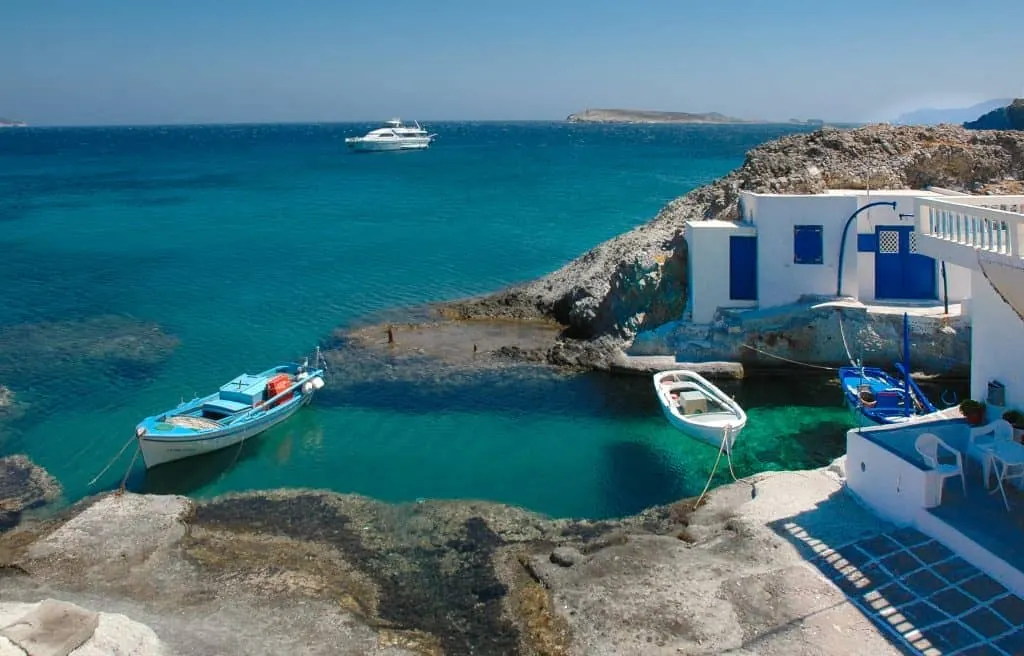
Kimolos is a small volcanic island beside Milos, with a lived-in main village, a harbour at Psathi and a coastline of pale rock and distinct coves. It suits a holiday built from village walks, local food and a few chosen beach or walking outings.
Get to know the place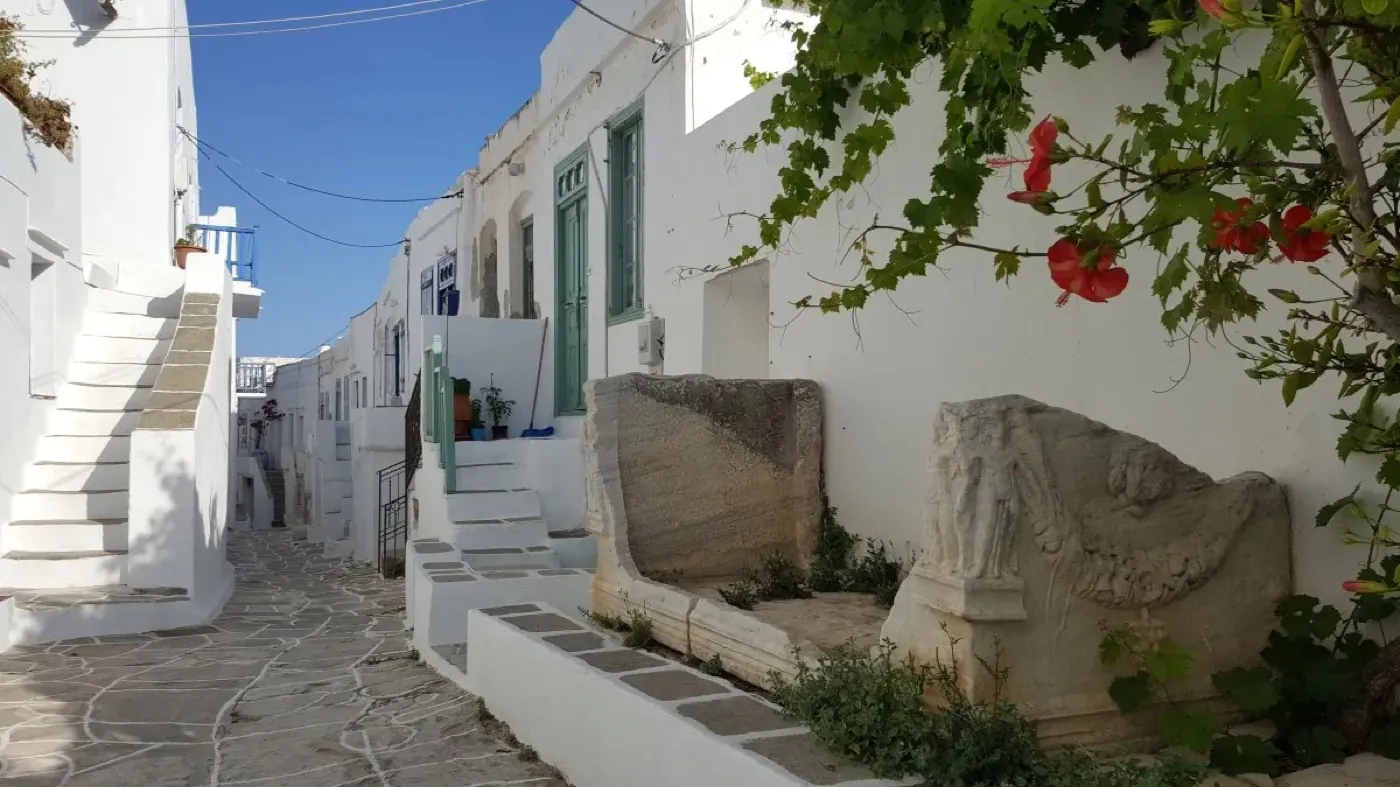
Sifnos brings village lanes, pottery and a strong cooking tradition into a landscape of paths and distinct coastal settlements. It suits a holiday with time for an inland walk, a pottery visit and a chosen beach, with food as part of the place rather than an extra item between attractions.
Get to know the place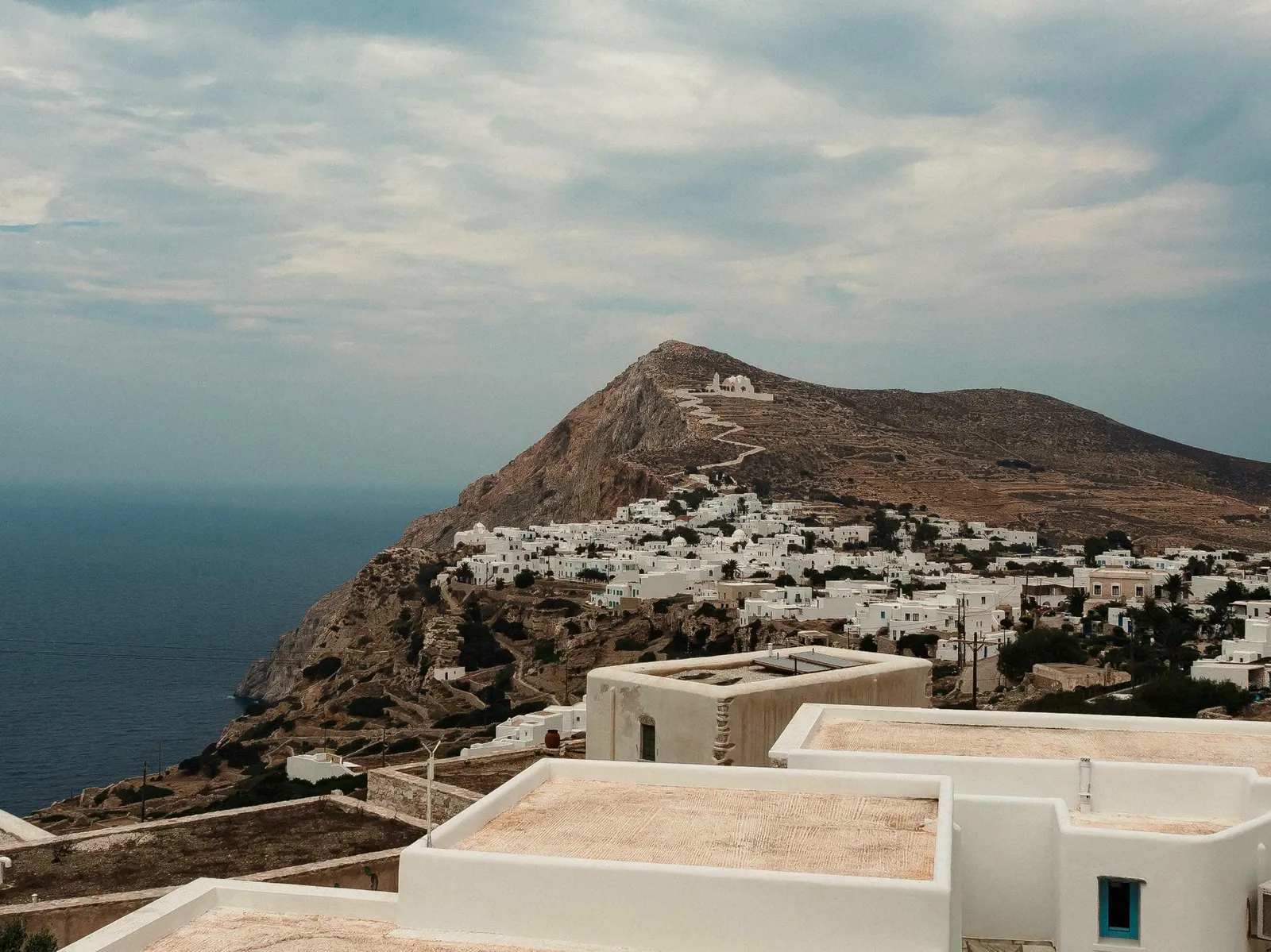
Folegandros brings together a cliff-edge Chora, the farming landscape of Ano Meria and small beaches reached by road, path or boat. Its appeal is in the contrast between village evenings and open, rocky countryside. Choose a few outings and give each enough time rather than trying to collect every cove in one day.
Get to know the place