
Kos.
Kos is an island for combining archaeology, coastal cycling and long beach days. Its main town brings ancient remains and Italian-era streets together, while the western end offers a different landscape around Kefalos.
Photo credits1
- Depicts: Kos
Make your way to Kos
Choose a tool and your dates to check the options for your trip.
More ways to explore
- Country
- Greece
- Region
- Dodecanese
- Currency
- EUR
- Time zone
- Europe/Athens
- Airport
- KGS
Kos is an island for combining archaeology, coastal cycling and long beach days. Its main town brings ancient remains and Italian-era streets together, while the western end offers a different landscape around Kefalos.
For a first visit, choose between a town base with excursions and a beach base with a few cultural outings. Distances across the island matter: a hotel near the airport does not put you within walking distance of Kos Town.
When to go
Our suggested sightseeing periods are spring and early autumn, when cycling and archaeological visits are easier to combine with breaks outdoors. Summer suits a beach-centred holiday, with early starts for exposed sites. In winter, base yourself in town and verify the transport and accommodation you need.
Getting there
Kos has an airport and a main-town ferry port. They are separate arrival points: book onward transport for the one on your ticket. If continuing to another island, check the exact departing harbour, sailing date and connection time rather than assuming every boat leaves from Kos Town.
Getting around
Walk or cycle around the flatter town and coastal routes where suitable infrastructure exists. Use buses, taxis or a car for inland villages and longer cross-island journeys. A cycle-friendly town does not mean every rural road is a cycle path; choose your route and equipment accordingly.
A taste of the destination
Look for krasotiri, the island’s wine-matured cheese, thyme honey and tomato spoon sweet. Local olive oil and seasonal vegetables deserve space alongside seafood. A bakery or food-producer stop can be part of a village excursion; check opening times rather than assuming a tasting is available without booking.
What to see
The Asklepieion is the key archaeological excursion outside town. Within Kos Town, link the ancient Agora, Roman remains and the archaeological museum around Eleftherias Square. At Agios Stefanos, coastal ruins add a historical stop to a beach day. Check individual opening hours before fixing the order.
Towns and neighbourhoods
Kos Town suits people who enjoy a lively waterfront and walkable sights. Tigaki and Marmari are beach-oriented bases. Kefalos and its coastal settlements give access to the southwest; Zia is an inland village outing. Combine nearby stops instead of repeatedly crossing from one end of Kos to the other.
Beaches and coast
Tigaki, Marmari, Mastichari and the Kefalos coast offer different stretches of sand. Agios Stefanos is useful for combining swimming with its coastal archaeological setting. Pick a beach after checking wind and local conditions, and establish how you will return before relying on a late bus.
Where to stay
Kos Town is our first choice for a short cultural stay without a car. Tigaki or Marmari suits beach time with town excursions. The Kefalos area suits a slower western stay. Check whether a beach address is actually on the shore or requires a road crossing or hillside walk.
Useful before you go
Keep a helmet and lights in your cycling plan, and leave exposed archaeological sites for cooler hours. For international ferry trips, verify travel-document requirements with the operator. Do not treat a domestic island connection and a border crossing as interchangeable bookings.
Good to know before you go
How should I arrive?
Kos has an airport and a main-town ferry port. They are separate arrival points: book onward transport for the one on your ticket. If continuing to another island, check the exact departing harbour, sailing date and connection time rather than assuming every boat leaves from Kos Town.
Which area should I choose as a base?
Kos Town is our first choice for a short cultural stay without a car. Tigaki or Marmari suits beach time with town excursions. The Kefalos area suits a slower western stay. Check whether a beach address is actually on the shore or requires a road crossing or hillside walk.
How do I get around?
Walk or cycle around the flatter town and coastal routes where suitable infrastructure exists. Use buses, taxis or a car for inland villages and longer cross-island journeys. A cycle-friendly town does not mean every rural road is a cycle path; choose your route and equipment accordingly.
What should I try at the table?
Look for krasotiri, the island’s wine-matured cheese, thyme honey and tomato spoon sweet. Local olive oil and seasonal vegetables deserve space alongside seafood. A bakery or food-producer stop can be part of a village excursion; check opening times rather than assuming a tasting is available without booking.
Sources & references
These references support the guide. Confirm opening hours, access and travel services before you go.
Where could the journey go next?
More guides in Greece. Compare the places and check actual connections before combining stops.
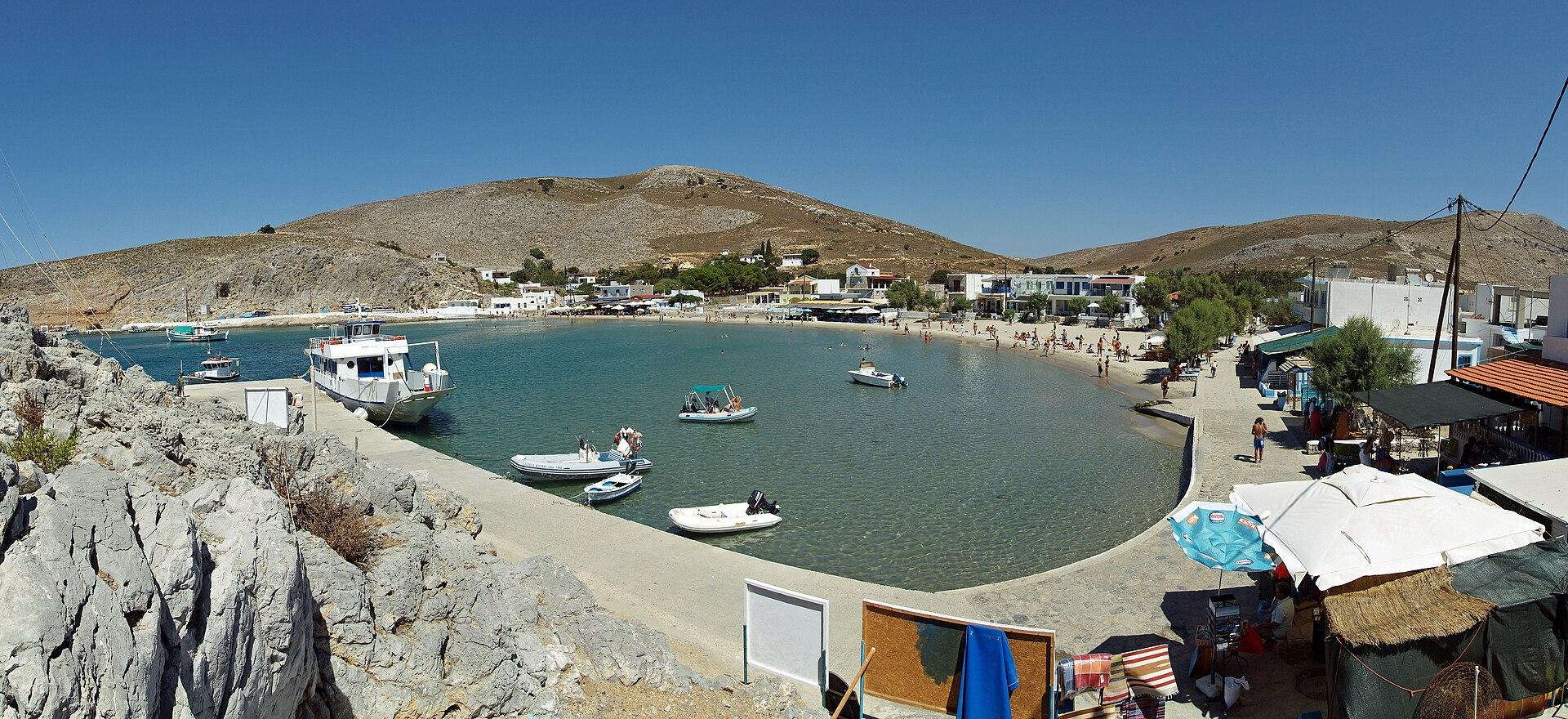
Pserimos
Pserimos is a small island between Kalymnos and Kos, with village life gathered around Avlakia and its sandy bay. A day visit can combine swimming with lunch, while an overnight stay gives you time to see the waterfront after excursion boats leave.
Get to know the place
Kalymnos
Kalymnos brings a working maritime identity together with limestone climbing landscapes. Pothia’s harbour and sponge-diving heritage give the island a character distinct from a purpose-built resort, while the western coast opens views towards Telendos.
Get to know the place
Nisyros
Nisyros is a volcanic island in the Dodecanese where the caldera, stone-built villages and dark shores give each day a different focus. Staying overnight lets you enjoy Mandraki after a sightseeing outing and visit the interior at a slower pace.
Get to know the place
Leros
Leros is a quieter Dodecanese choice, with sheltered-looking bays, low hills and an unusually varied architectural history. Its settlements offer different experiences: fishing-village evenings, a castle above the rooftops and the distinctive planned streets of Lakki.
Get to know the placePhoto credits4
- Depicts: PserimosPserimos 3. Author: kallerna. Credit: Own work. License: CC BY-SA 3.0 (https://creativecommons.org/licenses/by-sa/3.0). Source: https://commons.wikimedia.org/wiki/File:Pserimos_3.jpgCropped to fit the display.
- Depicts: Kalymnos
- Depicts: NisyrosMandraki 20-jun-2013 04. Author: Mike1979 Russia. Credit: Own work. License: CC BY-SA 3.0 (https://creativecommons.org/licenses/by-sa/3.0). Source: https://commons.wikimedia.org/wiki/File:Mandraki_20-jun-2013_04.jpgCropped to fit the display.
- Depicts: Leros
