
Guadeloupe.
Guadeloupe is a French Caribbean archipelago with distinct island landscapes and Creole cultural traditions. It rewards a trip planned around several places rather than a single beach base: cities, agricultural islands, volcanic slopes and small ferry destinations have different rhythms.
Photo credits1
- Depicts: Guadeloupe
A little closer to Guadeloupe
Geography, regions and practical details from the country guide. Go straight to a chapter, or browse every destination below.
Go straight to the destinationsGuadeloupe is a French Caribbean archipelago with distinct island landscapes and Creole cultural traditions. It rewards a trip planned around several places rather than a single beach base: cities, agricultural islands, volcanic slopes and small ferry destinations have different rhythms.
Choose the islands first, then match accommodation to the actual road and sea connections. Pointe-à-Pitre, Basse-Terre city, Trois-Rivières and Grand-Bourg are useful gateways, but their names are not interchangeable with whole islands or with every terminal in their area.
Geography
The two main islands, Basse-Terre and Grande-Terre, form the central part of a wider archipelago. Basse-Terre has the volcanic highlands and national-park landscapes; Grande-Terre includes the Pointe-à-Pitre urban area and a different coastal setting. Marie-Galante lies southeast, and Les Saintes has two inhabited islands with separate arrivals. La Désirade is another distinct island destination.
Distinguish Basse-Terre city from Basse-Terre island and Terre-de-Haut from Terre-de-Bas. That simple check prevents a hotel address or ferry search from placing you on the wrong coast or island.
Regions to explore
Pointe-à-Pitre suits markets, urban heritage and the Mémorial ACTe. Basse-Terre city combines Fort Delgrès with a historic centre; Trois-Rivières has Indigenous engraved rocks as well as ferry departures.
Terre-de-Haut offers a village, Fort Napoléon and island coast; Terre-de-Bas has its own settlements and pottery heritage. Grand-Bourg is one gateway to Marie-Galante, with plantation history and excursions into other communes. Keep mountain walks and outer-island visits as separate parts of the itinerary rather than squeezing them into a transfer day.
Languages
French is the language of administration and public services. Guadeloupean Creole is a living regional language and an important part of local culture. Learn a courteous greeting and retain the French spelling of your destination and port when arranging transport. If a tour must be in English, confirm that directly instead of assuming every departure is bilingual.
Money
Guadeloupe uses the euro. Compare the complete price of an outing, including the selected ferry, road transfers and any site admission, before booking. Check each provider’s payment options, particularly when visiting smaller islands or making several separate reservations. Current charges belong to the booking screen or operator, not to a fixed guide estimate.
Local culture
The archipelago’s heritage includes Indigenous petroglyphs at Trois-Rivières and places that examine slavery, resistance and plantation society, including Mémorial ACTe, Fort Delgrès and Habitation Murat. Give their interpretation time as well as taking photographs.
Food changes across the islands: Marie-Galante is associated with bébélé and sugar-cane products, while Les Saintes is known for tourment d’amour pastries. Markets provide an introduction to produce and local cooking. Ask what is seasonal and what ingredients a dish contains.
Practical information
Guadeloupe Maryse Condé Airport is the main international air gateway. Check the road transfer to your chosen port: FRS uses Bergevin in Pointe-à-Pitre, while Trois-Rivières is a separate southern departure for Les Saintes. Marie-Galante has distinct Grand-Bourg and Saint-Louis arrivals depending on the service.
Météo-France identifies a drier January–April and wetter June–November. Check current weather for crossings and the national park’s latest access notices for volcanic trails. Avoid assuming a clear coastal morning establishes safe conditions in the highlands.
Good to know before you go
Is Guadeloupe one island?
It is an archipelago. Main islands and smaller ferry destinations need their own transport plans.
Which currency is used?
The euro.
Are Basse-Terre city and island the same destination?
The city is on the much larger island. Check the commune and address.
Does every Marie-Galante ticket arrive at Grand-Bourg?
No. Saint-Louis is another port; use the arrival printed on your booking.
Sources & references
These references support the guide. Confirm opening hours, access and travel services before you go.
- 01Guadeloupe official tourism, public authority or transport operator
- 02Guadeloupe official tourism, public authority or transport operator
- 03Guadeloupe official tourism, public authority or transport operator
- 04Guadeloupe official tourism, public authority or transport operator
- 05Guadeloupe official tourism, public authority or transport operator
- 06Guadeloupe official tourism, public authority or transport operator
- 07Guadeloupe official tourism, public authority or transport operator
- 08Guadeloupe official tourism, public authority or transport operator
- 09Guadeloupe official tourism, public authority or transport operator
- 10Guadeloupe official tourism, public authority or transport operator
- 11Guadeloupe official tourism, public authority or transport operator
- 12Guadeloupe official tourism, public authority or transport operator
- 13Guadeloupe official tourism, public authority or transport operator
- 14Guadeloupe official tourism, public authority or transport operator
- 15Guadeloupe official tourism, public authority or transport operator
Find your place in Guadeloupe
Open the guides, get a feel for the differences between places, and find the ones that fit your plans.

Basse-Terre
Basse-Terre is Guadeloupe’s administrative capital, a coastal city on the much larger volcanic island of the same name. Its fort, market and public buildings offer a focused introduction to local history, distinct from the island’s rainforest and mountain excursions.
Read the field guide
Grand-Bourg, Marie-Galante
Grand-Bourg is a harbour town and a useful starting point for Marie-Galante, the low limestone island southeast of Guadeloupe’s main islands. Sugar-growing landscapes and plantation heritage distinguish a visit here from the volcanic mountain routes of Basse-Terre.
Read the field guide
Pointe-à-Pitre
Pointe-à-Pitre is Guadeloupe’s commercial and cultural city on Grande-Terre, with markets, historic streets and a working waterfront. It is a useful introduction to urban Creole life and a transport gateway, rather than a beach resort.
Read the field guide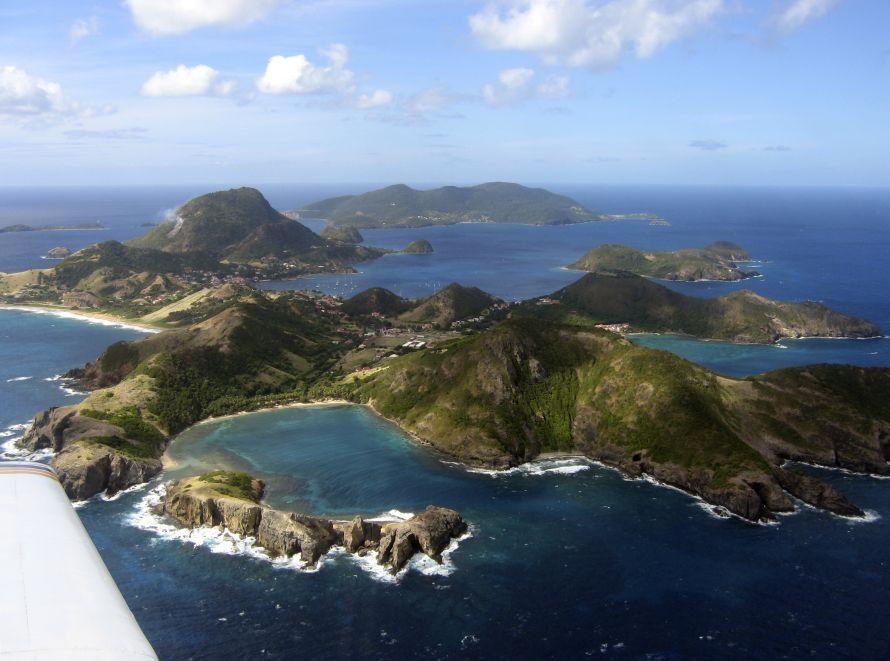 Area overview: Les Saintes
Terre-de-Bas
Terre-de-Bas is the western inhabited island of Les Saintes, south of Guadeloupe’s main islands. Its villages, pottery remains and hilly walking routes offer a different visit from the busier harbour and fort circuit on neighbouring Terre-de-Haut.
Read the field guide
Terre-de-Haut
Terre-de-Haut is the best-known inhabited island of Les Saintes, with a village wrapped around a broad bay and Fort Napoléon on the hill above it. The harbour, colourful houses and beaches make a compact island visit, but the terrain becomes steep away from the waterfront.
Read the field guide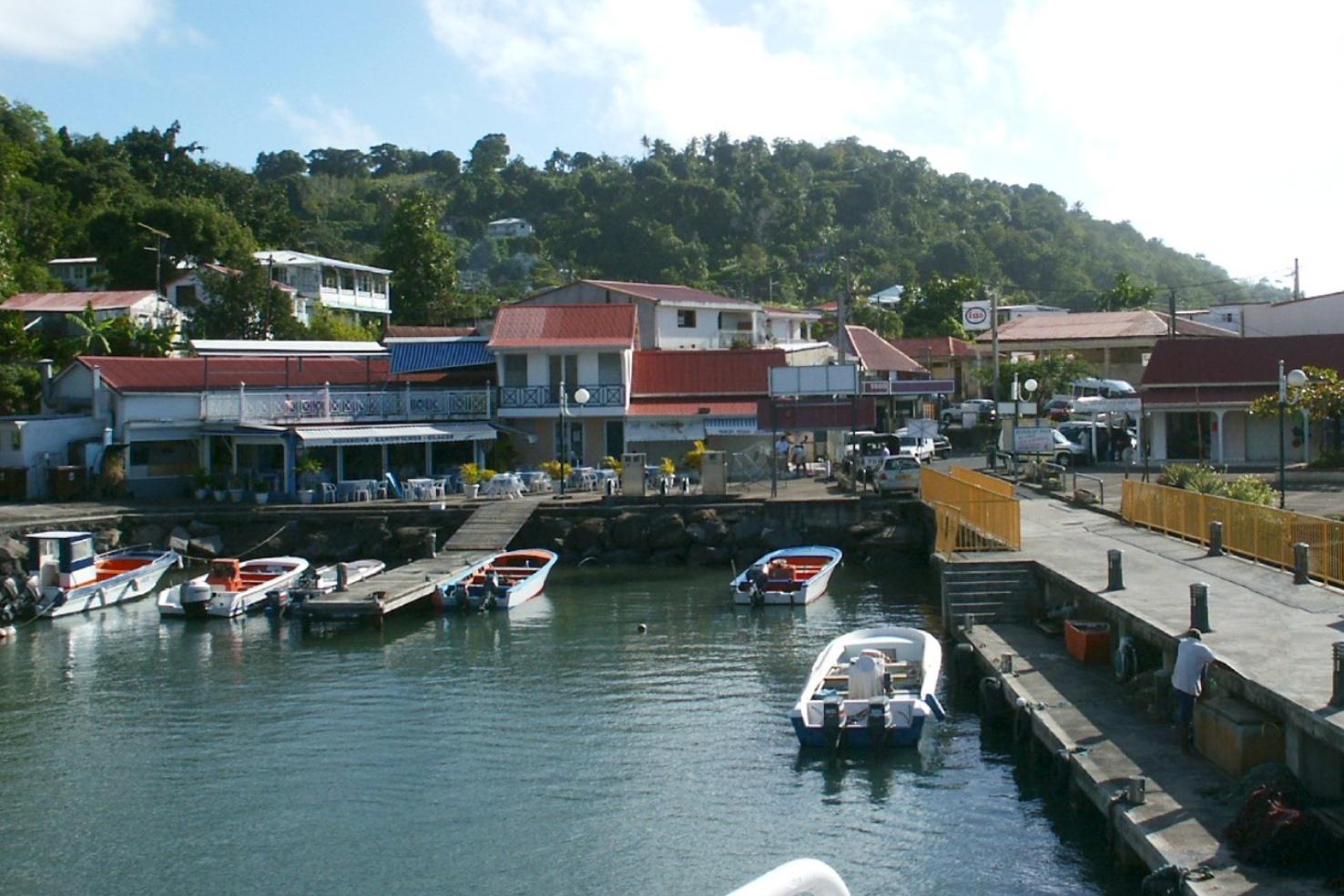
Trois-Rivières
Trois-Rivières lies on the southern coast of Basse-Terre island and is an important ferry gateway to Les Saintes. It also has its own archaeological heritage and volcanic shoreline, so it can reward a deliberate mainland visit before or after a crossing.
Read the field guidePhoto credits6
- Depicts: Basse-TerreMonts Caraïbes depuis le Fort Louis Delgrès à Basse-Terre. Author: Daniel Jolivet. Credit: https://www.flickr.com/photos/sybarite48/5611245400/. License: CC BY 2.0 (https://creativecommons.org/licenses/by/2.0). Source: https://commons.wikimedia.org/wiki/File:Monts_Cara%C3%AFbes_depuis_le_Fort_Louis_Delgr%C3%A8s_%C3%A0_Basse-Terre.jpgCropped to fit the display.
- Depicts: Grand-Bourg, Marie-GalanteMarie-Galante. Ma case chez Madame Chéri (1895) / [photogr.] A. S[alles]. Author: Salles, André (1860-1929). Photographe. Credit: Bibliothèque nationale de France. License: Public domain (https://creativecommons.org/publicdomain/mark/1.0/). Source: https://commons.wikimedia.org/wiki/File:Marie-Galante._Ma_case_chez_Madame_Ch%C3%A9ri_(1895)_-_(photogr.)_A._S(alles)_-_btv1b53185929z_(1_of_3).jpg
- Depicts: Pointe-à-PitrePointe-à-Pitre. Author: Zivax. Credit: Own work. License: CC BY-SA 3.0 (https://creativecommons.org/licenses/by-sa/3.0). Source: https://commons.wikimedia.org/wiki/File:Pointe-%C3%A0-Pitre.JPGCropped to fit the display.
- Area image: Les Saintes — Area overview: Les SaintesLes Saintes vues avion. Author: Original uploader was Vilars at fr.wikipedia. Credit: Transferred from fr.wikipedia ; transferred to Commons by User:Bloody-libu using CommonsHelper .. License: CC BY-SA 1.0 (https://creativecommons.org/licenses/by-sa/1.0). Source: https://commons.wikimedia.org/wiki/File:Les_Saintes_vues_avion.jpgCropped to fit the display.
- Depicts: Terre-de-HautEglise de Terre-de-Haut. Author: UHF. Credit: Own work. License: CC BY-SA 3.0 (https://creativecommons.org/licenses/by-sa/3.0). Source: https://commons.wikimedia.org/wiki/File:Eglise_de_Terre-de-Haut.jpgCropped to fit the display.
- Depicts: Trois-RivièresGuadeloupe06. Author: Rcdut. Credit: Own work. License: CC BY-SA 3.0 (https://creativecommons.org/licenses/by-sa/3.0). Source: https://commons.wikimedia.org/wiki/File:Guadeloupe06.JPGCropped to fit the display.
