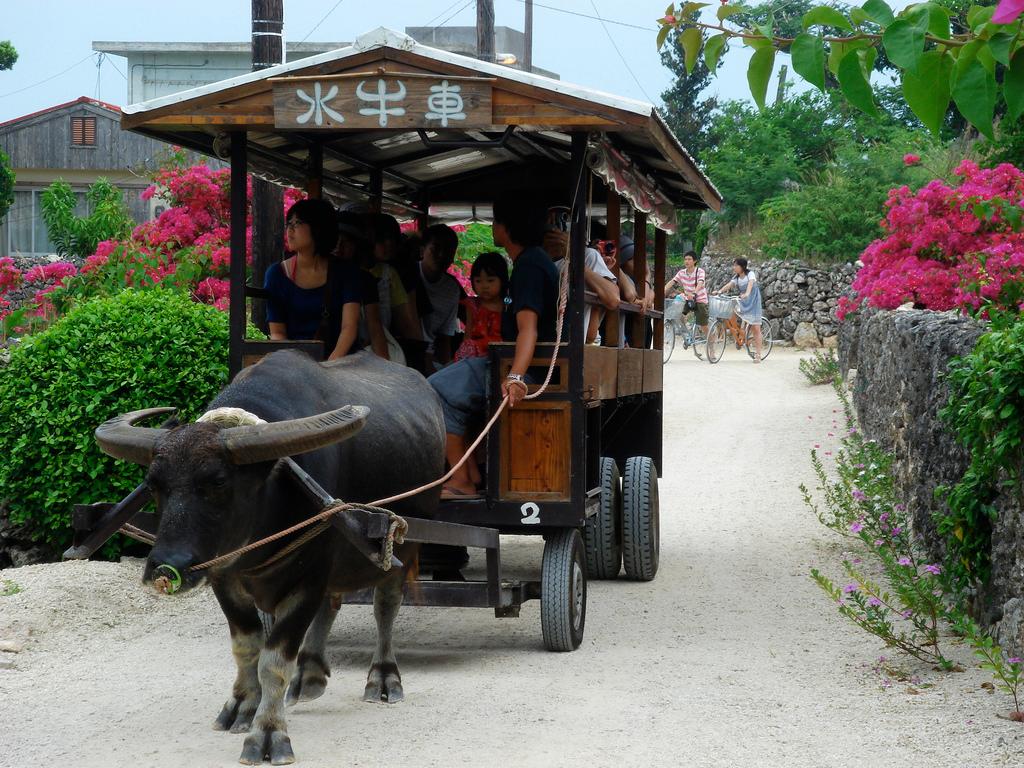
Taketomi.
Taketomi is a small coral island close to Ishigaki, best known for its preserved village of red-tiled houses, stone walls and pale sandy lanes. It is a place for walking slowly, noticing roof-top shisa guardians and learning how an inhabited landscape is cared for.
Photo credits1
- Depicts: TaketomiFlickr user: Ken@Okinawa Okinawa, Japan https://www.flickr.com/people/trektrack/Wikimedia CommonsCC BY-SA 2.0JP-47 Taketomi Water-buffalo-taxi. Author: Flickr user: Ken@Okinawa Okinawa, Japan https://www.flickr.com/people/trektrack/. Credit: Flickr: https://www.flickr.com/photos/trektrack/2835574036/. License: CC BY-SA 2.0 (https://creativecommons.org/licenses/by-sa/2.0). Source: https://commons.wikimedia.org/wiki/File:JP-47_Taketomi_Water-buffalo-taxi.jpgCropped to fit the display.
Make your way to Taketomi
Choose a tool and your dates to check the options for your trip.
More ways to explore
- Country
- Japan
- Currency
- JPY
- Time zone
- Asia/Tokyo
Taketomi is a small coral island close to Ishigaki, best known for its preserved village of red-tiled houses, stone walls and pale sandy lanes. It is a place for walking slowly, noticing roof-top shisa guardians and learning how an inhabited landscape is cared for.
The easy sea connection makes it a popular day outing, but a village guesthouse offers a quieter perspective after excursion groups leave. Combine the village with one or two western coastal stops rather than treating the island as a circuit of photo locations. Its streets and sacred places remain part of daily community life.
When to go
Subtropical heat makes water, shade and breaks useful during village walks. Typhoons or rough seas can disrupt even this relatively short ferry connection. Taketomi’s Tanadui seed festival follows the local lunisolar calendar; confirm the actual programme and visitor instructions rather than translating its traditional month directly into a fixed Gregorian date.
Getting there
Use a current passenger sailing from Ishigaki to Taketomi Port. The ferry terminal is not inside the village, so allow for walking or the local transfer arrangement after arrival. If coming from another Yaeyama island, verify the actual current connection rather than assuming every pair has a direct boat throughout the year.
Getting around
Walking and rental bicycles suit the island’s scale. Local transport links the port, village and beach areas, but confirm pickup and last departure when you arrive. Ride slowly around residents and pedestrians, and dismount where sand or narrow lanes make cycling awkward. A bicycle does not justify entering private yards or sacred grounds.
Local food
Small village kitchens offer a chance to try regional Yaeyama cooking. Yaeyama soba commonly uses pork and fish-based ingredients, while brown-sugar sweets are another regional taste. Confirm what is open before leaving the village for the coast. Overnight visitors should ask whether their minshuku stay includes dinner and breakfast, since evening choices are limited compared with Ishigaki.
What to see
Start at Taketomi Yugafu-kan visitor centre for orientation, then explore the village lanes. The Folk Craft Museum introduces minsah weaving, its patterned cotton cloth and local dye traditions. Nishi Pier is a western coastal landmark with sunset views. Check return transport before making sunset the finale of a day trip.
Towns and neighbourhoods
The port is separate from the central village, which is the heart of everyday life and most small-scale accommodation. Western paths lead towards Kondoi Beach, Kaiji Beach and Nishi Pier. These places are close enough for a coherent outing, but heat and loose sand make a relaxed pace more useful than a tight timetable.
Coast and outdoors
Kondoi is the main broad western beach used for swimming; check tide, weather and the conditions on the day. Kaiji is associated with star-shaped sand made from tiny marine organisms, but swimming there is prohibited because of currents. Leave the sand on the beach. A scenic shoreline and a designated swimming area are not the same thing.
Where to stay
Village guesthouses and minshuku are the natural choice for traditional small-scale accommodation. A resort on the eastern side offers a different style and location, so compare transfer and meal arrangements rather than only room photographs. Staying in Ishigaki keeps more urban choice but gives less flexibility for Taketomi’s quiet evening hours.
Useful before you go
Respect utaki sacred sites and photograph people or ceremonies only with permission. Follow the community’s rubbish rules and leave shells, plants and star sand in place. Bring sun protection and keep the return sailing visible in your plans. Do not enter a house compound merely because its traditional architecture is attractive.
Good to know before you go
Can I swim at Kaiji Beach?
No. It is a shore-viewing and star-sand location, with swimming prohibited because of currents.
May I take star sand home?
No. Leave it on the beach and follow the island’s conservation instructions.
Is the ferry terminal in the village?
No. Plan the short onward walk or local transfer separately.
Why stay overnight?
A village stay offers quieter evenings and more time for the inhabited landscape, provided accommodation and meals are arranged.
Sources & references
These references support the guide. Confirm opening hours, access and travel services before you go.
Where could the journey go next?
More guides in Japan. Compare the places and check actual connections before combining stops.

Ishigaki
Ishigaki is the Yaeyama Islands’ main arrival hub, but it deserves more than a night between flights and boats. A developed southern city gives way to reefs, agricultural scenery, wooded hills and long coastal drives. The island can support both practical ferry connections and a slower stay of its own.
Get to know the place Local overview of Kohama
Kohama
Kohama lies between Ishigaki and Iriomote, with sugarcane fields, cattle pastures and a central village of red-tiled houses. Its appeal is the contrast between a working agricultural island and the comfort of resort stays. The sea is never far away, but the interior gives the visit much of its character.
Get to know the place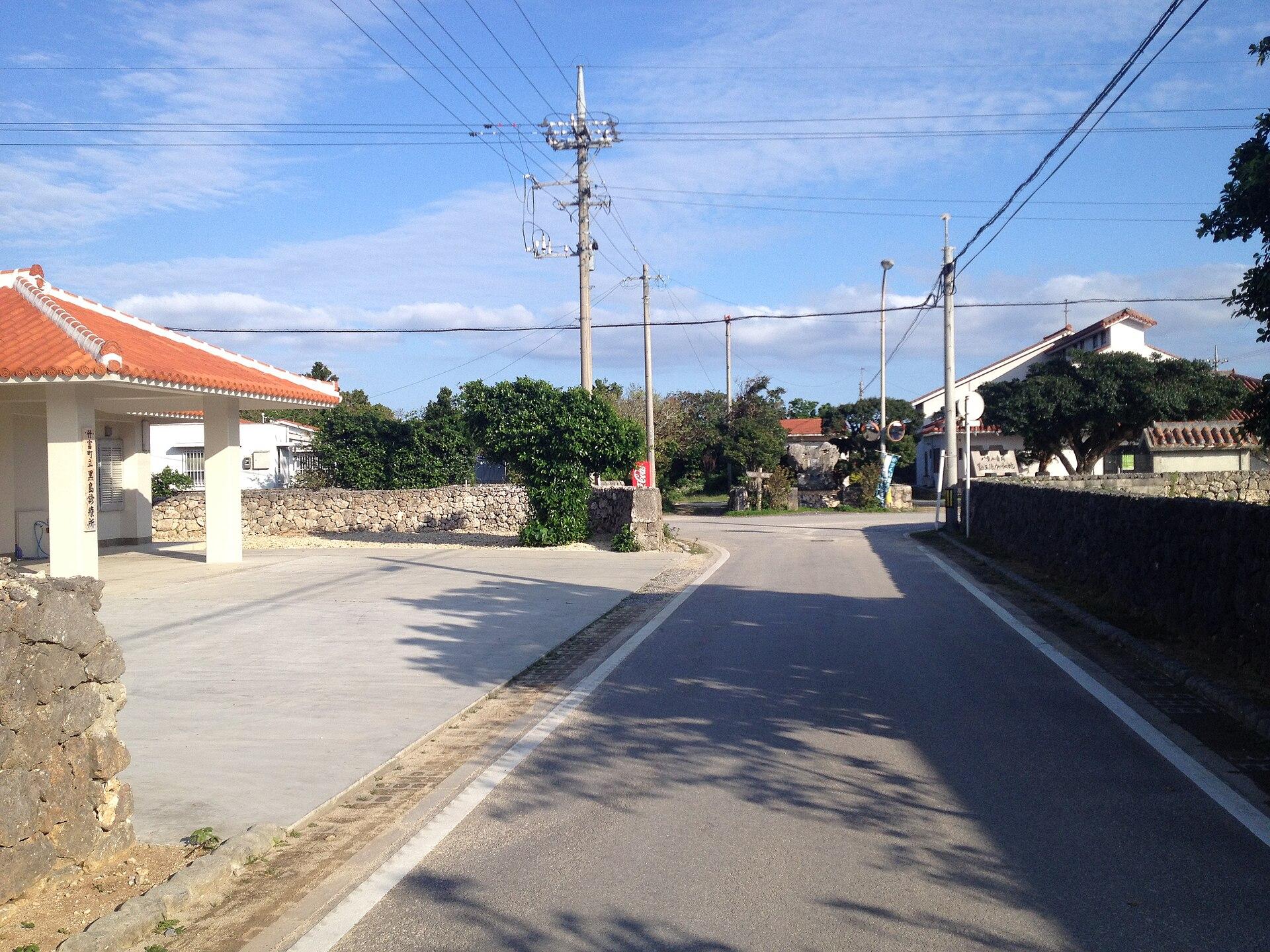 Area near Kuroshima (Yaeyama)
Kuroshima (Yaeyama)
Kuroshima in the Yaeyama Islands is a low, pastoral island southwest of Ishigaki. Cattle fields, small settlements and a broad sky shape its character more than resort development. A bicycle outing here feels very different from the hills of Kohama or the forested interior of Iriomote.
Get to know the place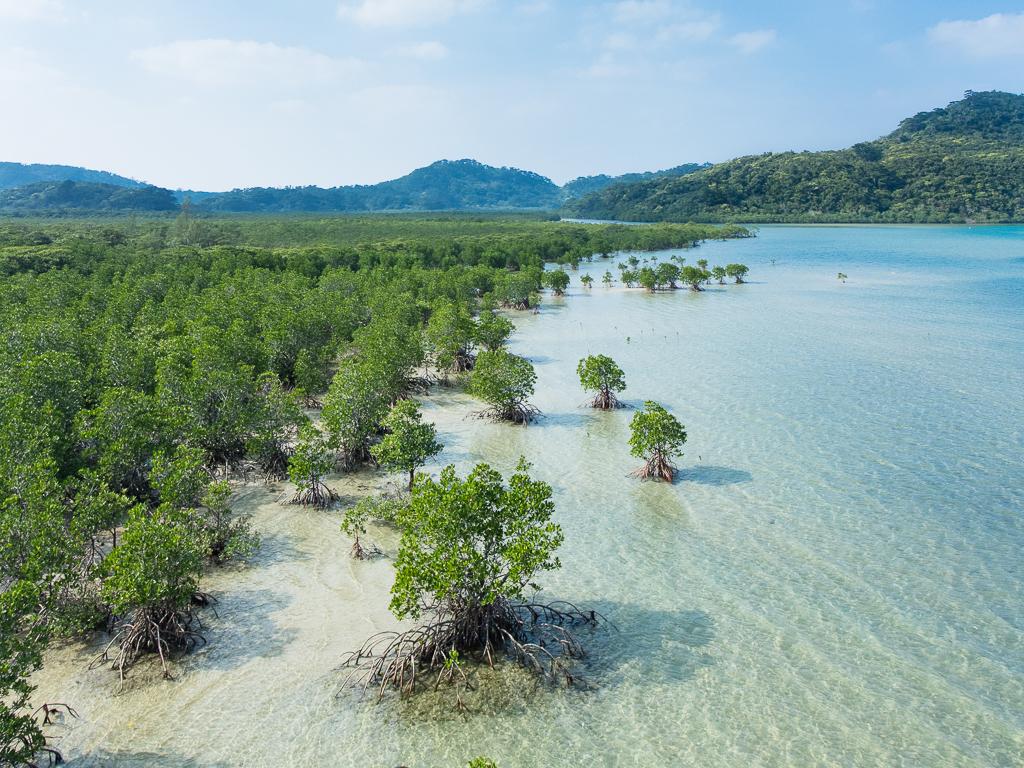 Iriomote Island overview
Ohara (Iriomote Island)
Ohara is Iriomote’s southeastern passenger gateway, beside the lower Nakama River and within reach of the island’s eastern communities. It is a useful starting point for mangrove boat trips, a visit towards Yubu and a slower look at the forest-and-village landscape. This is a different arrival from Uehara in the north.
Get to know the placePhoto credits4
- Depicts: IshigakiIshigaki-Cave08s5s4592. Author: 663highland. Credit: Own work. License: CC BY 2.5 (https://creativecommons.org/licenses/by/2.5). Source: https://commons.wikimedia.org/wiki/File:Ishigaki-Cave08s5s4592.jpgCropped to fit the display.
- Area image: at Mount Ufu-daki in Kohamajima, Taketomi Town, Okinawa Prefecture , Japan . — local overview of Kohama.Ufu-daki Kohamajima Okinawa Japan01s3s4440. Author: 663highland. Credit: Own work. License: CC BY 2.5 (https://creativecommons.org/licenses/by/2.5). Source: https://commons.wikimedia.org/wiki/File:Ufu-daki_Kohamajima_Okinawa_Japan01s3s4440.jpgCropped to fit the display.
- Area image: Center of Kuroshima — Area near Kuroshima (Yaeyama)Kuroshima 1. Author: VKaeru. Credit: Own work. License: CC BY-SA 3.0 (https://creativecommons.org/licenses/by-sa/3.0). Source: https://commons.wikimedia.org/wiki/File:Kuroshima_1.jpgCropped to fit the display.
- Area image: Iriomote Island — Iriomote Island overviewMangrove swamp, Iriomote Island, Okinawa, Japan. Author: Anagounagi. Credit: Own work. License: CC BY-SA 4.0 (https://creativecommons.org/licenses/by-sa/4.0). Source: https://commons.wikimedia.org/wiki/File:Mangrove_swamp,_Iriomote_Island,_Okinawa,_Japan.jpgCropped to fit the display.
